
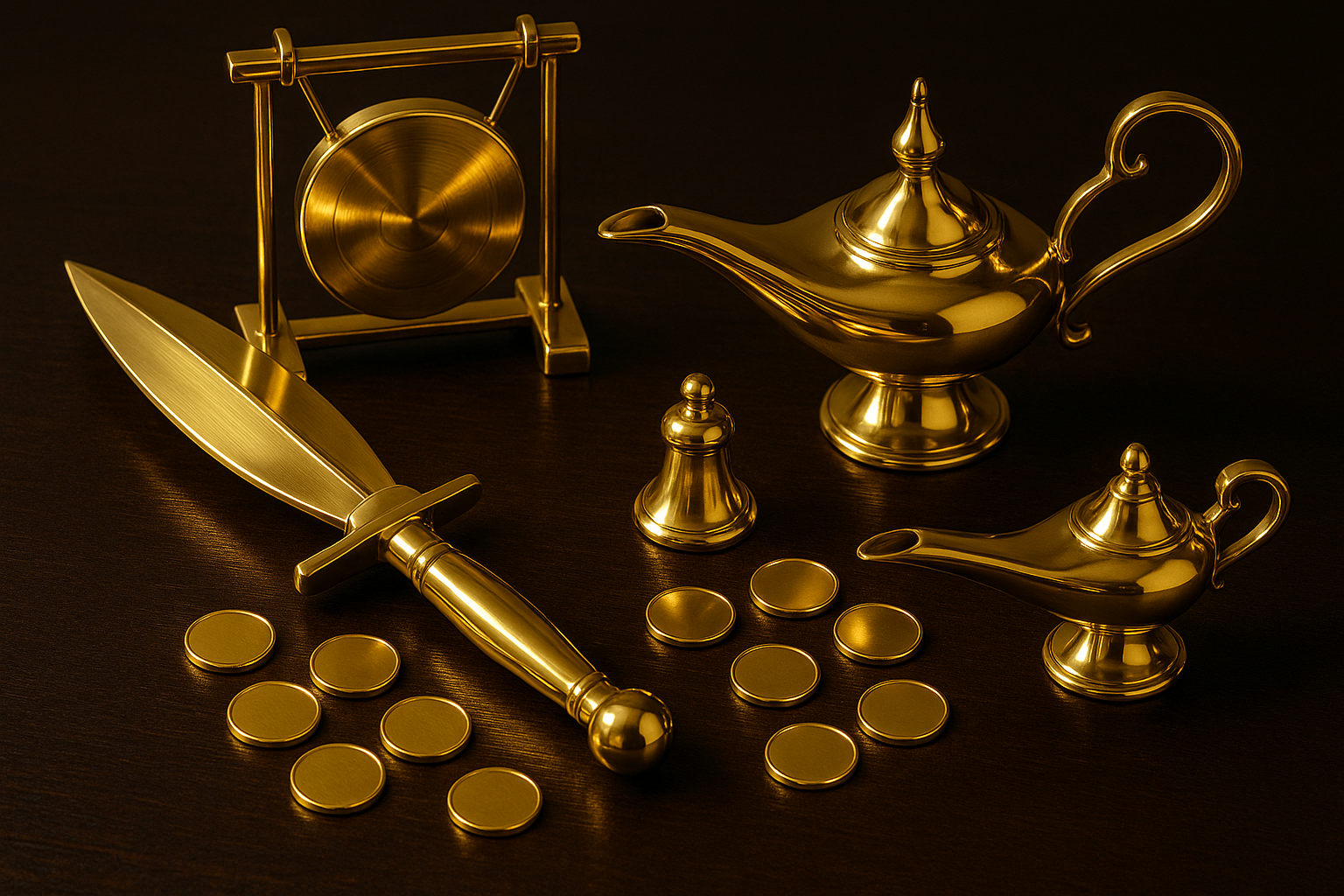
“Brass binds the unseen, for in its gleem the spirits flee.”
Brass
There are many legends and folklore traditions where brass weapons or items are specifically required to harm, kill, or banish supernatural beings. Brass was seen as a "pure" or “resonant” metal in ancient cultures, capable of warding off evil spirits, fairies, or demons. Iron is more commonly cited in European folklore for repelling the fae, but brass appears in specific contexts, especially in Asian and Middle Eastern tales.
We use brass both as protection measure and a dispelling tool. The extensive lore around brass is enough a reason to keep brass items available for an investigation.
European and British Isles Lore
In some English and Scottish folklore, brass is believed to repel ghosts or undead spirits, similar to how iron works against fairies. Brass pins or buttons were sewn into clothing or placed in coffins to prevent the dead from rising as vampires or revenants. In the 19th-century collection Notes on the Folk-Lore of the Northern Counties of England and the Borders by William Henderson (1879), brass is noted as a talismanic metal for banishing restless spirits—striking a ghost with a brass object like a candlestick or knife could dissipate it. This ties into broader protective uses of metals, where brass's yellowish glow symbolized sunlight or purity, ineffective against iron-averse beings but potent against ethereal ones.
While cold iron is the standard weapon against the fae in Celtic myths, there are some regional British stories that specify brass bells or trumpets to banish changelings or pixies. In Cornish mining folklore, "knockers,” a type of spirits haunting the mines, could be driven off with brass tools. Iron offended them but brass's sound disrupted their illusions. A brass dagger or blade was said to sever fairy enchantments permanently.
Asian Legends
In Chinese folklore, brass mirrors or coins are used to ward off or trap evil spirits, and brass swords appear in tales of demon hunters. The jiangshi, undead corpses that hop and drain life force, are vulnerable to brass. (Qing Dynasty ghost stories compiled in Strange Tales from a Chinese Studio by Pu Songling, 1740). A brass blade or talisman inscribed with Taoist seals can "pin" or destroy them, as brass conducts spiritual energy better than steel. Taoist priests in these legends use brass ritual jian swords to exorcise demons, slicing through their qi, their spiritual life force.
In Japanese kappa myths, while cucumbers are the primary weakness (as of yet untested by our team), some Edo-period stories (Gazu Hyakki Yagyō by Toriyama Sekien, 1776) describe brass arrows or spears as needed to kill river spirits or oni that resist iron. Brass's association with Buddhist bells (dōtaku) extends to weapons—ringing brass could stun yokai, allowing a fatal strike. This is echoed in modern retellings like in the Kwaidan collections by Lafcadio Hearn (1904).
In Filipino mythology, the aswang, shape-shifting vampires, could be killed permanently with a brass bolo infused with holy oil, said to sever their supernatural regeneration.
Middle Eastern and Islamic Lore
In some tales from One Thousand and One Nights, brass vessels (like Solomon's bottles) are used to seal djinn, implying brass's binding power. Extending this, brass swords or lamps are weapons of choice against fire spirits—striking an ifrit with brass banishes it to its realm, as iron is too "earthly" and doesn't resonate with their fiery nature. Medieval Islamic texts like The Book of Wonders by Zakariya al-Qazwini (13th century) describe brass amulets and blades for slaying ghouls.
African Lore
In West African Yoruba-influenced legends, brass bells or daggers from Ife smithing traditions could banish witches or spirits (Yoruba Myths by Ulli Beier 1980). The metal's sound and shine disrupt sorcery.
These legends give enough worldwide backing from disparate cultures to warrant the use of brass.