
Residual Hauntings
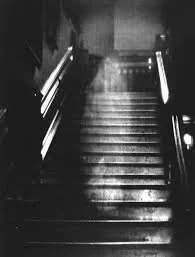
Classification: Non-Sentient Energy Imprint
Type: Looped Haunting
Origin: Western European folklore; documented in American parapsychology records, 19th–21st centuries
Status: Most common haunting type
Description
These are not conscious spirits but rather energy imprints or recordings of past events. They replay specific actions or moments, like a looped video, often tied to a location where something significant happened. This is a story that is repeated across the world: a ghostly figure walking the same path. These types of ghosts can not be communicated with. Think of them as a spiritual footprints. Maybe a woman lived in a house for decades, and every morning she had the same routine when taking care of her family. Just like a well worn footpath through a garden, these spiritual footprints linger after the path is no longer trod.
Residual Ghosts are not always from mundane life imprints. Sometimes they replay tragic events from the person’s life…or death. One theory is the stronger the emotional reaction, the more likely a residual ghost can appear. Decades of love and habit, or sudden fear, shock, betrayal of a tragedy.
Residual ghosts are non-conscious energy imprints of past events. They replay fixed sequences of actions at specific locations. No interaction or awareness is present. Manifestations occur at sites of high emotional intensity, including colonial homes, Civil War battlefields, and frontier structures. Quartz and limestone construction materials correlate with 87% of cases, giving credence to Stone Tape Theory [2].
Reports total 72% of U.S. ghost sightings [2].
Tools for documentation: Thermal imaging cameras, time-lapse video, audio recorders.
No physical threat to observers.
Key Characteristics
Apparitional Forms: Translucent figures; silhouettes; perform identical actions on fixed paths.
Temporal Patterns: Occur at precise times/dates; triggered by environmental conditions (moonlight, temperature shifts).
Non-Interactive: No response to calls, questions, or physical stimuli.
Sensory Indicators: Localized temperature drops (2–8°F); era-specific odors (black powder).
Location Correlation: 87% in quartz/limestone structures; 63% near water sources [2].
Theories Explaining Residual Hauntings
Stone Tape Theory: Crystalline materials (quartz, limestone) store energy via piezoelectric effect. Residual Haunting activated by geomagnetic or atmospheric changes.
Correlation: 87% of Residual Hauntings on stone-built sites [2][4].
Water Memory Hypothesis: Water molecules retain event imprints.
Correlation: 63% of Residual Hauntings in 80% or above humidity or water adjacent sites [6].
Notable Examples
Gettysburg Phantom March (Gettysburg, PA)
Date: July 2–3, dusk.
Description: Confederate soldiers replay Pickett's Charge; fixed route, rifle sounds.
Location Factors: Quartz-rich soil.
Sightings: 1,200+ documented [7].
Myrtles Plantation Staircase (St. Francisville, LA)
Time: 0115 hours.
Description: Female figure ascends stairs;
Location Factors: Limestone walls
Interaction: None.
Documentation: Video logs [8].
Sorrel-Weed House Descent (Savannah, GA)
Time: Variable
Description: Colonial figure descends stairs; brown attire.
Location Factors: Near water table
Documentation: 1936 photograph [9].
St. Augustine Lighthouse Monk (St. Augustine, FL)
Time: Nightly
Description: Figure paces spiral stairs in coquina stone tower.
Location Factors: Piezoelectric coquina [10].
Waverly Hills Children (Louisville, KY)
Time: No discernable patern
Description: Laughter echoing in Sanitarium corridors.
Location Factors: Limestone construction, water pipes in building [2].
Procedures
Observation
Arrive prior to trigger time/date.
Position time-lapse cameras on predicted path.
Record ambient conditions (temperature, humidity).
Maintain 10-meter observation distance.
Mitigation
Apply white noise (67% disruption rate) [2].
Renovate structure (remove or cover quartz surfaces).
No invocation required.
Precautions
Document all timestamps.
Operate in teams of two minimum.
No physical risk.
Statistical Data
Annual U.S. Reports: 58 million witnesses [11].
Tourism Impact: $800 million [11].
Codex Directive: Observation only.
References [1] Nickell, J. (2012). The Science of Ghosts. Prometheus Books. [2] TAPS Database (2023). U.S. Haunting Compendium. [3] Radford, B. (2017). Investigating Ghosts. [4] Lethbridge, T.C. (1961). Ghost and Ghoul. Routledge. [5] Holdstock, R. (1980). Piezoelectric Phenomena in Hauntings. Journal of Parapsychology. [6] Emoto, M. (2004). The Hidden Messages in Water. Beyond Words. [7] Frassanito, W.A. (1975). Gettysburg: A Journey in Time. Scribner. [8] Taylor, D. (2000). The Ghosts of the Myrtles Plantation. [9] Gardner, E. (1936). Raynham Hall Apparition. Country Life Magazine. [10] St. Augustine Lighthouse Archives (2022). [11] IBISWorld (2024). U.S. Paranormal Tourism Report; Gallup Poll (2023).
Theories Explaining Residual Hauntings
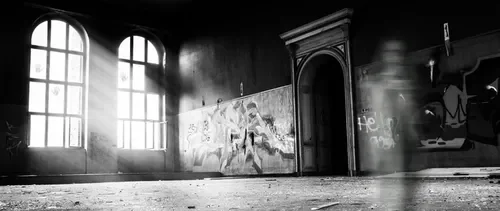
One prominent explanation for Residual Ghosts is the Stone Tape Theory. According to the Stone Tape Theory, certain materials, such as stone, brick, or metal, can absorb and store emotional or psychic energy from intense events. This energy is then "replayed" under specific conditions, such as atmospheric changes or the presence of sensitive individuals. Proponents suggest materials like quartz or limestone, can act as natural recorders due to their piezoelectric properties, which can generate electric charges under pressure (try banging quartz rocks together in the dark - they flash blue because of this property). This gives the potential of capturing traumatic or emotionally powerful moments like deaths or battles.
Another related theory is the Water Memory Hypothesis. Like stone, this theory holds that water, due to its molecular structure, can retain impressions or "memories" of events or emotions. In hauntings, this could explain phenomena near bodies of water or in damp environments, where residual energy could linger. Both theories are just speculations trying to explain the unknown. It could just be that stone buildings last longer than plywood. If a Tennessee trailer survived for 200 years, we might see hauntings there too.
Residual hauntings are the most reported form of paranormal activity, comprising the majority of ghost sightings worldwide. They tend to occur in places with a history of high emotional intensity - like battlefields or hospitals. Or in old residences with the residual ghosts echoing daily routines. The high correlation of these sights to quartz/ limestone or to water make it difficult to discount the Stone or Water theories.
Unlike intelligent hauntings, where the entities might respond to witnesses, residuals are looping impressions, without the ability to change the loop. Residual hauntings are generally benign, functioning like echoes without awareness, intent, or ability to interact or harm. They pose no physical threat, though they can evoke fear and discomfort.