
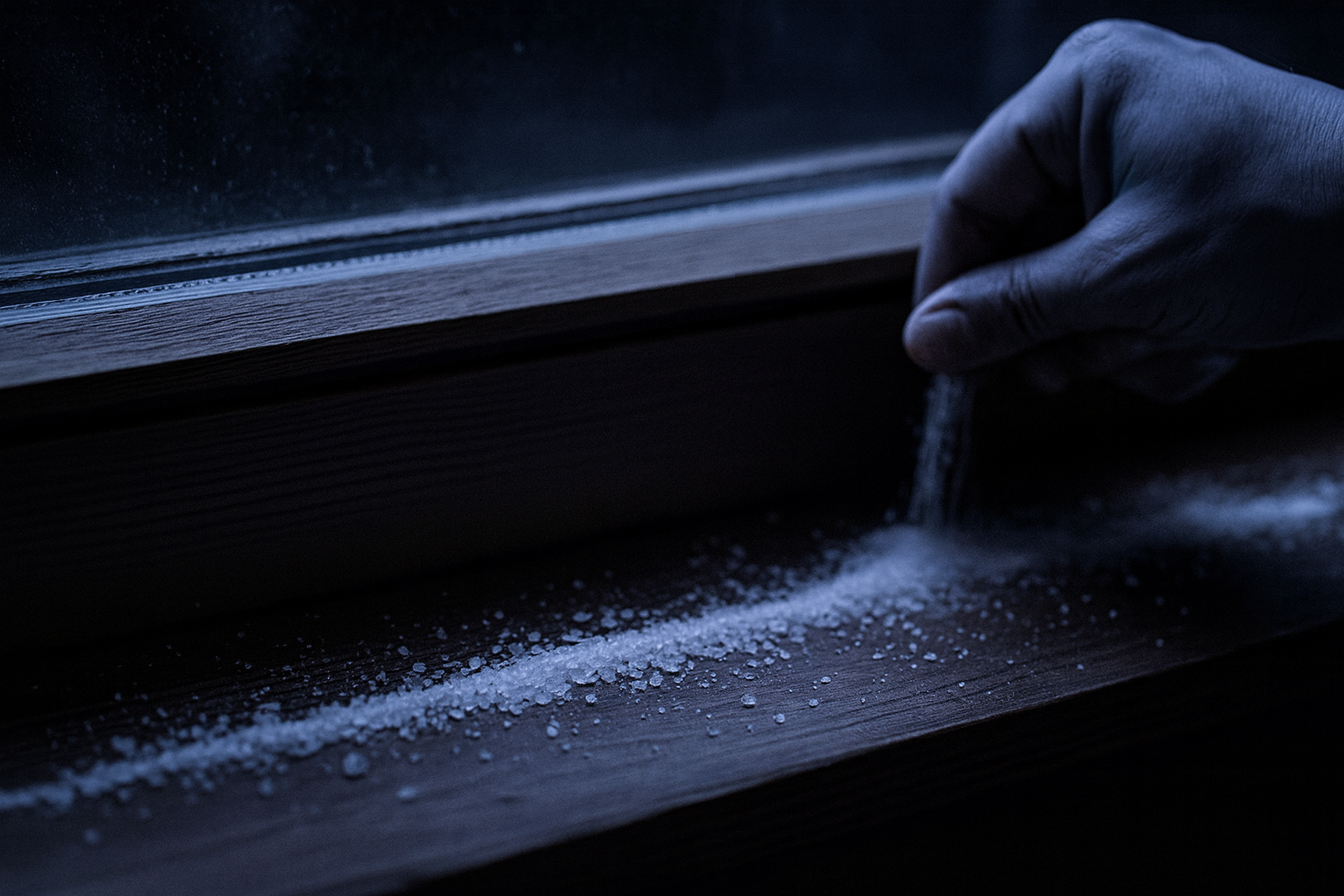
“Salt and iron confound the fae.”
Salt
Salt has been a potent symbol of purity, preservation, and life across human cultures for millennia. Often it is attributed with the power to repel, dispel, or harm supernatural entities. Across the world, from every continent, cultures and religions incorporate salt in protective rituals. In our work, we use salt as barriers against spiritual entities, and to disperse them.
Europe
In European folklore, salt is a staple defense against malevolent forces. In medieval Christian traditions, blessed salt is mixed into holy water to exorcise demons and purify spaces, as seen in Roman Catholic baptism rites where a pinch is placed in the infant's mouth post-exorcism to ward off Satan's influence.
Throwing spilled salt over the left shoulder (where the devil lurks) blinds evil spirits, a superstition depicted in Leonardo da Vinci's The Last Supper.
Irish lore uses salt with the Lord's Prayer to cure "fairy-struck" individuals, dispelling fairy enchantments.
Eastern European vampire myths involve scattering salt on graves to trap the undead. Salt circles or lines across thresholds are said to create barriers that ghosts, demons, or witches cannot cross, as salt's purity burns them.
In Bavarian and Ukrainian customs, salt detects bewitchment in children, and Ozark folklore, likely influenced by European settlers, uses salt to identify witches, who avoid it.
Asia
Asian traditions emphasize salt's purifying role against spirits. In Japanese Shintoism, small salt piles know as morijio are placed at entrances or restaurants to ward off evil spirits (yokai or oni), a practice tied to ritual purification (harae). Sumo wrestlers even throw salt to cleanse the ring of malevolent forces.
Buddhist practices involve throwing salt over the shoulder after funerals to prevent spirits from following home.
In Chinese and Korean folklore, salt scatters malevolent qi or repels fox spirits (gumiho). Salt is often thrown at ghosts during exorcisms.
Philippine mythology uses salt against engkantos (fairies), aswang (witches), and viscera suckers. Piles of salt near doors block entry of spirits to the home. Even offerings to spirits must be salt-free as the salt harms them.
Hindu rituals mix salt with water to purify homes of evil spirits.
Middle East and Abrahamic Religions
In Judaism, salt on Shabbat challah protects against the evil eye or demons like Lilith, symbolizing God's covenant and incorruptibility. Biblical stories, like Elisha purifying water with salt (2 Kings 2:19-22), underscore its cleansing power against spiritual corruption.
Islamic hadiths cite salt as a blessing; sprinkling it in corners banishes jinn or shaytan.
Ancient Near Eastern incantations, like the Mesopotamian Maqlû, use salt to ward off demons. Persian lore burns salt for smoke barriers against evil.
Africa
African folklore employs salt in protective rituals against spirits. In some cultures, sprinkling salt in doorways and windows prevents negative energies or evil spirits from entering.
In Ghana, The Gambia, Zimbabwe, and Kenya, pregnant women use salt in amulets or ceremonies to shield against malevolent entities, often combined with herbs for communal cleansing.
South African Zulu traditions reference "thokoloshe salt" for purification and calming, though primarily spiritual protection comes from other means like elevated beds.
In African diaspora practices like Hoodoo (U.S.) and Santería (Caribbean), salt drives away malevolent spirits, used in floor washes or baths to cleanse homes. Haitian Vodou uses salt in rituals to repel bokor (sorcerers) or malicious loa.
Americas
Native American traditions view salt as a symbol of the earth's healing, used in purification rituals to cleanse spiritual impurities, though specific anti-spirit uses are less documented.
In Navajo lore, salt repels skinwalkers or evil winds in ceremonies.
Oceania and Australia
In Hawaiian and Samoan cultures, sea salt (pa'akai) is placed in house corners and thresholds to block spirits, symbolizing purity and warding off bad energy.